

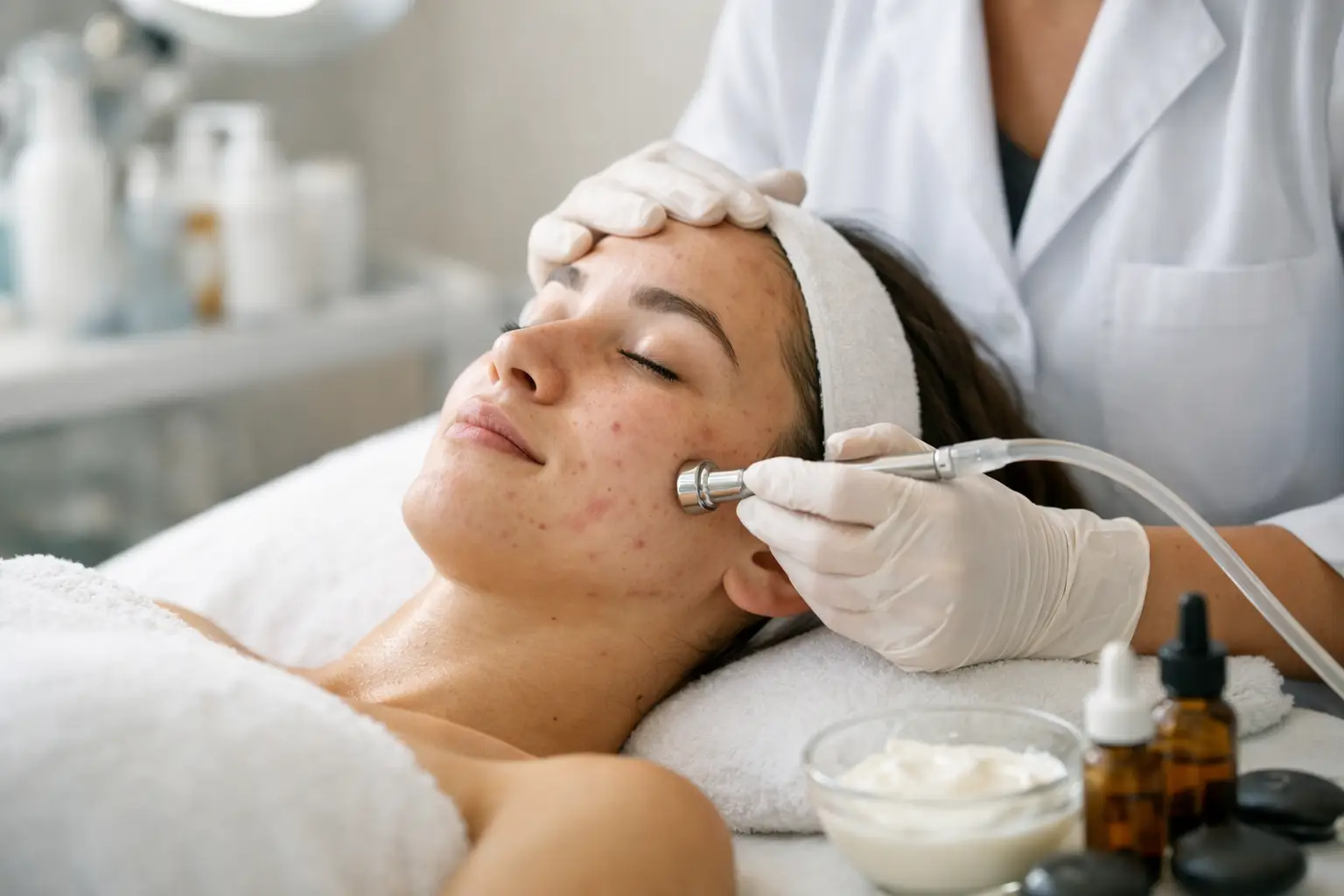
A facial can feel like the fresh start your skin has been asking for, especially when congestion, shine and stubborn breakouts are affecting your confidence. But can facials help acne in a meaningful way? They can support clearer-looking, better-balanced skin when the treatment is chosen carefully. They are not a one-appointment cure, and the wrong approach can leave active acne feeling more irritated.
For acne-prone skin, the goal is never to scrub, pick or overwhelm it into submission. The best facial approach is calm, considered and tailored to what your skin is doing right now.
Can facials help acne without making it worse?
Yes, a suitable professional facial may help manage some of the factors that contribute to breakouts, including excess oil, blocked pores, surface build-up and dehydration. Acne is complex, though. Hormones, genetics, stress, certain skincare products and medication can all play a part, so a facial should sit alongside a sensible home routine rather than replace medical advice where it is needed.
A skilled therapist begins by looking beyond the spots themselves. Are you dealing with blackheads around the nose and chin? Small, uniform bumps across the forehead? Inflamed pimples around the jawline? Skin that feels tight but looks oily? Each pattern needs a different level of care.
For mild congestion and occasional breakouts, regular professional treatments can help keep pores clearer and encourage a healthier-looking complexion. If your acne is very inflamed, painful, widespread or leaving scars, a facial may still be relaxing and supportive, but it is wise to speak to a GP or dermatologist too. Deep cysts and nodules are not something to squeeze or treat aggressively in the salon.
What an acne-friendly facial should focus on
An effective facial for blemish-prone skin is usually more about precision than pampering extras. Your therapist may use a gentle cleanse to remove make-up, SPF and excess oil without stripping the skin. This is followed by suitable exfoliation, carefully selected products and, where appropriate, limited hygienic extraction of non-inflamed blackheads or congestion.
Hydration matters more than many people expect. When skin is over-cleansed or dried out by harsh spot treatments, it can feel uncomfortable, appear dull and produce more oil in response. Lightweight, non-comedogenic hydration can help support the skin barrier, leaving the complexion looking calmer rather than coated.
A treatment may also include soothing masks or cooling steps that reduce the appearance of temporary redness. The immediate glow is lovely before an occasion, but the bigger benefit comes from a plan that respects your skin’s limits over time.
Extractions: helpful in the right hands
Professional extractions can be useful for certain blocked pores, particularly blackheads and closed comedones. They should be carried out only after the skin has been properly prepared, using clean technique and gentle pressure.
Not every blemish should be extracted. Inflamed spots, cysts and deep painful breakouts can become more irritated, scar or spread bacteria when they are picked. If you have ever left a treatment feeling raw, very red or covered in fresh marks, the facial may have been too intensive for your skin at that time.
Exfoliation: less can be more
Exfoliation can lift dull surface build-up and help prevent pores from becoming blocked, but there is a fine line between effective and excessive. Physical scrubs with rough particles are often a poor match for active acne because friction can aggravate already-sensitive skin.
Professional enzyme or acid-based exfoliation may be a better option for some clients, depending on their skin condition and current products. If you use retinoids, prescription acne treatments, strong acids or benzoyl peroxide at home, say so at your consultation. Your therapist needs that information to avoid over-treating your skin.
The facials that may suit different types of acne
There is no single ‘best facial’ for every breakout. A consultation is where the treatment becomes personal rather than a standard menu choice.
If your skin is mainly oily with visible blackheads and clogged pores, a deep-cleansing facial with controlled extraction and light exfoliation may be suitable. The aim is a cleaner, fresher feel without creating dryness or sensitivity.
If you have a mixture of spots and dehydration, barrier-supporting treatments are often the smarter choice. Skin can be shiny on the surface while still lacking water underneath, especially if you have been using strong acne products. Gentle cleansing, calming ingredients and lightweight moisture can make skin look more balanced.
For red, sensitive or inflamed breakouts, the focus should be on comfort and reducing irritation. Vigorous massage, abrasive scrubs, heavy oils and lots of extraction may not be right. Sometimes the best treatment is a pared-back one that gives your skin a break.
Acne linked to hormones, often seen around the chin, jawline and lower cheeks, may continue to return even with excellent facials. A regular facial routine can improve the look and feel of the skin, but it cannot switch off hormonal triggers. This is where realistic expectations make all the difference.
When to delay a facial
There are moments when booking a facial straight away is not the best move. Delay treatment and seek professional medical guidance if you have severe, painful acne, open or infected skin, a sudden unexplained rash, cold sores, or significant swelling.
You should also tell your therapist if you are pregnant, breastfeeding, have recently had a cosmetic procedure, use prescription skincare, or are taking medication that affects your skin. Some active ingredients and advanced treatments may not be appropriate, while a gentler facial can still be adapted to suit you.
Do not book an intensive extraction facial the day before a wedding, party or important event. Even when performed well, your skin can look temporarily red afterwards. Give yourself a few days of breathing room so your complexion has time to settle and glow.
Make your results last between appointments
A facial can set the tone, but the products and habits you repeat at home shape your progress. Keep your routine straightforward and consistent. Cleanse gently, use a non-comedogenic moisturiser, wear SPF daily and avoid introducing several powerful new products at once.
Try not to chase every breakout with harsh drying treatments. It is tempting, especially when a spot appears before a night out, but irritated skin often looks more noticeable under make-up and can take longer to recover. If you are using targeted acne treatment, apply it as directed rather than layering on more because you want faster results.
Change pillowcases regularly, clean make-up brushes and avoid sleeping in make-up. These are small details, but they are worthwhile when you are trying to keep congestion under control. Most of all, keep hands away from your face. Picking may offer a brief feeling of relief, but it increases the chance of marks that linger far longer than the spot itself.
What to ask at your consultation
Be clear about what you want from the appointment: fewer blackheads, less oiliness, a smoother make-up base, calmer-looking redness or support with a regular skin plan. A good consultation should cover your current skincare, sensitivities, medication, lifestyle and whether your acne is active or mainly leaving marks behind.
Ask which steps are being recommended and why. You should leave knowing how your skin may look immediately after treatment, what aftercare to follow and when it makes sense to return. Results are usually gradual, particularly when congestion has built up over months, so beware of anyone promising flawless skin after one session.
At Glam Master, an acne-focused facial consultation can help you choose a treatment that feels luxurious while staying appropriate for your skin. Whether you are preparing for a special occasion or building a regular self-care routine, the right professional advice helps you spend your beauty time where it counts.
Clearer-looking skin rarely comes from doing the most. It comes from choosing the right treatment, giving your skin time to respond and booking care that works with your complexion, not against it.