

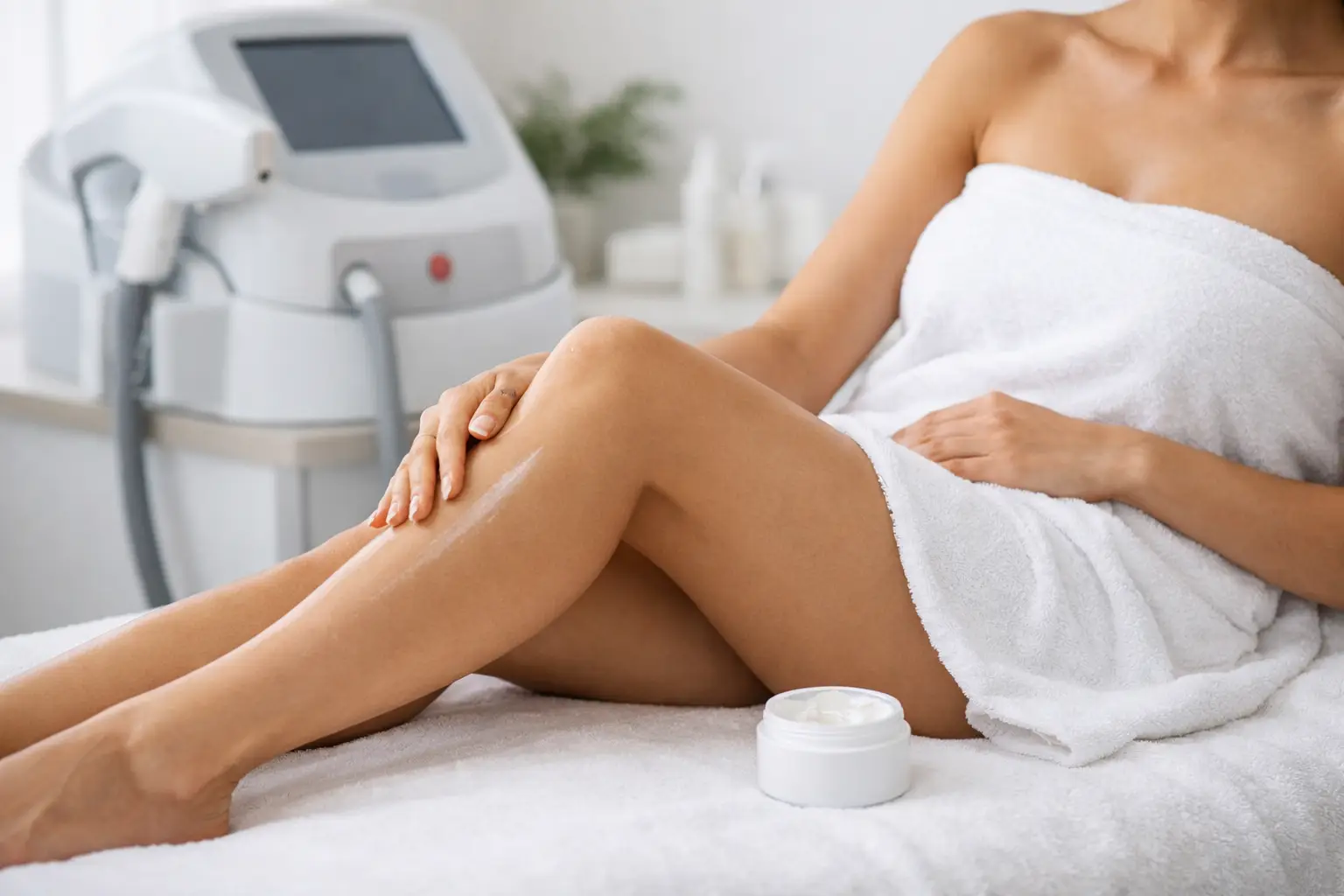
Smooth, hair-free skin is the goal, but what you do after your appointment has a real effect on how comfortable your skin feels while it settles. This guide to laser hair removal aftercare explains exactly how to care for the treated area, protect your results and recognise when your skin needs a little extra attention.
Laser hair removal works by directing light energy towards the pigment in the hair follicle. That process can leave the area feeling warm, sensitive or slightly prickly afterwards – a normal short-term response for many clients. Good aftercare is not complicated, but it does require you to press pause on a few parts of your usual beauty routine.
The first 24 hours after laser hair removal
Treat your skin gently on the day of treatment. Mild redness, warmth and small bumps around the follicles can appear, particularly on areas such as the bikini line, underarms, face or legs. These reactions usually calm down within a few hours, although sensitive skin can take a little longer.
Use a cool compress wrapped in a clean cloth if the area feels hot or uncomfortable. Do not put ice directly on the skin, as this can cause further irritation. A soothing, fragrance-free gel or moisturiser may also feel lovely, but only use products approved by your practitioner if you are unsure.
Keep the area clean and dry, and avoid hot showers, baths, steam rooms and saunas for at least 24 hours. Heat can make redness and sensitivity more noticeable. A cool to lukewarm shower is the better choice.
For the same reason, skip intense workouts, hot yoga and anything that makes you sweat heavily until the following day. Tight clothing can rub against freshly treated skin too, so choose loose, breathable fabrics where possible. This is especially useful after bikini, underarm or body treatments.
Avoid sun exposure and fake tan
Sun protection is one of the most important parts of laser aftercare. Treated skin is more vulnerable to irritation and changes in pigmentation, so avoid direct sun exposure whenever you can. Cover the area with clothing and apply a broad-spectrum SPF 30 or higher to exposed skin daily.
This is particularly important in the week after your session, but it is a smart habit throughout your course of treatment. Tanned skin can affect how safely and effectively future laser appointments are carried out, so tell your practitioner if you have been in strong sun, used a sunbed or returned from a sunny holiday.
Avoid fake tan, tanning drops and tinted body products on the treated area until your skin has fully settled. These products can be irritating straight after treatment, and they need to be completely removed before your next appointment. If you are planning a wedding, party or holiday, schedule your sessions with enough time for your skin to recover and your treatment plan to stay on track.
Keep your skincare routine simple
Freshly lasered skin does not need an elaborate routine. It needs calm, uncomplicated care. Use a gentle cleanser if the face has been treated, pat dry rather than rubbing with a towel, and apply a plain moisturiser if your practitioner has recommended one.
For several days, avoid exfoliating acids, retinol, scrubs, peel pads and strongly fragranced products on the treated area. These can sting or trigger unnecessary irritation. If you have had facial laser hair removal, be especially cautious with active skincare ingredients, including vitamin C, glycolic acid, salicylic acid and prescription retinoids. The right pause depends on the product and your skin, so ask at your appointment if you use medical-grade or prescription skincare.
Do not wax, thread, tweeze or use an epilator between sessions. Laser treatment needs the hair follicle to be present in order to target it. Shaving is normally fine once any sensitivity has passed, as it removes hair from the surface without pulling out the root. If hairs look as though they are growing after treatment, do not worry – some may be shedding from the follicle rather than actively regrowing.
What is normal after treatment?
A little redness, warmth, tenderness and follicular swelling are common responses. You may also notice a sensation similar to mild sun exposure. These effects should gradually improve, not get worse.
Hair shedding often begins around one to three weeks after treatment, depending on the area and your individual hair growth cycle. It can look as though the hair is coming back at first, but gentle washing and normal skin turnover usually help the treated hairs release naturally. Resist the urge to pick or scrub at them.
Results are gradual because hair grows in cycles. Laser is most effective when hairs are in their active growth phase, which is why a course of sessions is usually recommended. Your treatment schedule will be tailored around the area being treated, your hair type, skin tone and your response to each appointment.
When should you contact your practitioner?
Laser hair removal is a well-established treatment, but every client’s skin reacts differently. Contact your clinic for advice if redness, swelling or discomfort is worsening after 24 to 48 hours, or if you experience blistering, crusting, unusual changes in skin colour or signs of infection.
Do not try to treat a significant reaction with harsh products, exfoliation or home remedies. Take clear photographs if possible and speak to the practitioner who carried out your session. They can advise on the next steps and whether your following appointment needs to be adjusted.
It is also worth getting in touch before your next session if your health, medication or skincare routine has changed. Certain medicines and treatments can increase sensitivity to light, and open skin, active infection or a flare-up of a skin condition may mean it is safer to postpone.
Your laser hair removal aftercare checklist
For the best balance of comfort and visible progress, remember these essentials:
- Cool the area gently if it feels warm, using a clean cool compress.
- Avoid heat, heavy sweating, swimming pools, saunas and steam rooms for 24 hours.
- Use SPF 30 or higher on exposed skin and avoid tanning or sunbeds.
- Keep products gentle and pause scrubs, acids, retinoids and fragranced body care.
- Do not wax, thread, tweeze or epilate between sessions. Shave only when the skin feels settled.
- Wear loose clothing after body or bikini treatments to minimise friction.
Get the most from every session
Aftercare starts before you leave the clinic. Ask questions about the products you use, the activities you have planned and any skin concerns you have noticed since your previous appointment. A tailored plan is always better than guessing, especially if you are treating more sensitive areas or combining laser with facials, waxing or other beauty appointments.
At Glam Master, your treatment journey should feel as polished as your results. Follow the aftercare advice given specifically for your skin, keep your sessions consistent and give your skin the calm recovery time it deserves. The reward is a smoother routine, less time spent managing unwanted hair and more confidence in the skin you are in.