

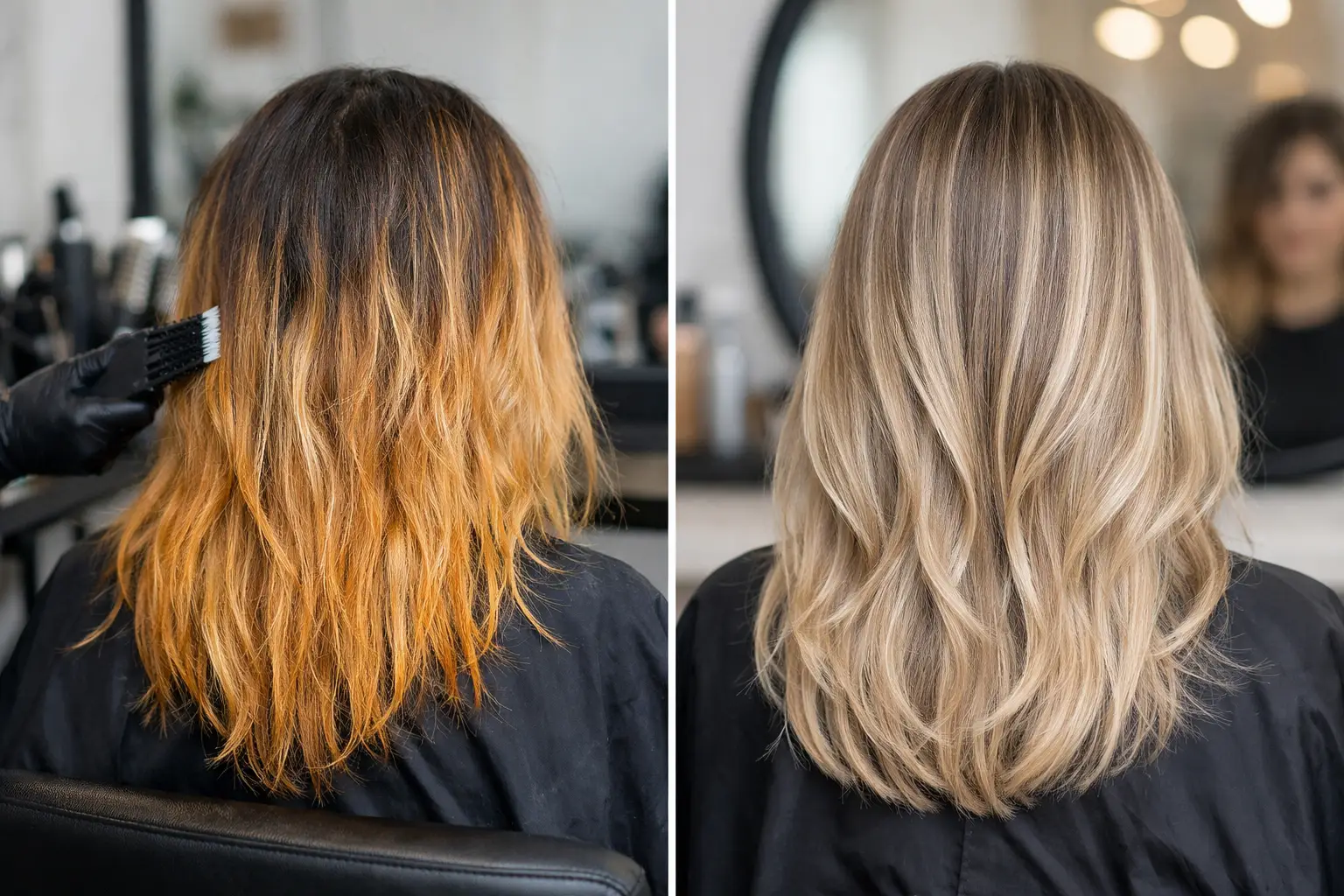
That orange band around your roots, box-dye black that suddenly feels far too dark, or blonde that has turned yellow after a few washes can make you want an instant fix. Hair colour correction is the professional route back to a shade that looks intentional, polished and right for you – without taking unnecessary risks with your hair’s condition.
The best results are never about simply putting another colour on top. They come from understanding what is already in the hair, choosing the right route forward and being realistic about the journey. Sometimes that means a gorgeous transformation in one appointment. Sometimes it means a carefully planned series of appointments that keeps your hair looking beautiful at every stage.
What is hair colour correction?
Hair colour correction is a tailored salon service used to improve an unwanted, uneven or unsuitable colour result. It may involve lifting artificial colour, neutralising brassiness, softening harsh regrowth, filling overly light hair before going darker, blending patchy areas or restoring a more natural-looking finish.
There is no single correction formula because every head of hair has a different history. A client who has used a dark home dye for years needs a very different approach from someone with fresh highlights that have gone too warm. Your natural base, previous colour, bleach history, hair thickness and condition all affect what can be achieved safely.
This is why a professional stylist will look beyond the colour you can see in the mirror. They will assess the underlying pigments in your hair and the likely result of each colour process before beginning. It is the difference between a quick cover-up and a colour that genuinely looks considered.
Start with a proper colour consultation
A consultation is not an optional extra when correcting colour. It is where the safest, most flattering plan begins. Bring inspiration pictures if you have them, but also be ready to explain exactly what you have used on your hair over the last few years, including home dyes, toners, henna, colour-depositing masks and previous salon work.
Honesty matters here. Certain products can react unpredictably with lightening services, while layers of dark dye may need time and multiple stages to lift evenly. A stylist is not judging your hair history – they are protecting your hair and planning the result you want.
A strand test may be recommended, especially if your hair has been coloured at home, bleached repeatedly or feels dry and fragile. This small test gives valuable information about how your hair will lift, how the tone will develop and whether it is ready for the planned service.
At Glam Master, a colour consultation is your chance to discuss the finish you want, whether that is brighter blonde, richer brunette, a softer balayage blend or a complete reset after a colour mishap. You should leave knowing the likely process, the level of maintenance involved and whether your goal is realistic for your current hair.
The most common colour problems and how they are corrected
Brassiness and unwanted warm tones
Brassy hair is one of the most common reasons clients book a correction. Blonde, highlighted and light brown hair can reveal yellow, gold or orange tones as a toner fades, particularly if the hair has been lifted from a naturally darker base.
The right fix depends on the warmth present. Pale yellow often needs a violet-based toner, while stronger orange tones may need blue or ash tones. If the hair has not been lifted light enough, toner alone cannot create an icy blonde. Further lightening may be needed first, provided the hair is in good enough condition.
Colour that is too dark
Going darker can feel glamorous until black or deep brown looks flat, harsh or unlike the shade you had imagined. Removing dark artificial colour is one of the more complex correction services, particularly where permanent box dye has been applied several times.
A stylist may use a colour remover, gradual lightening techniques or carefully placed highlights to break up the darkness. Expect warm red, copper or orange undertones to appear during this process. They are not necessarily a mistake – they are part of the pigment journey and may need to be refined over more than one visit.
Patchy colour, bands and uneven roots
Uneven colour often happens after home bleaching, overlapping lightener or applying different shades over time. You might have a bright root area, a darker middle band and lighter ends, or highlights that look stripy rather than blended.
Correcting this needs precision. Your stylist may add lowlights to create depth, lighten selected dark areas, root-smudge for a softer transition or tone the whole result to bring the shades together. The aim is usually dimension rather than one flat block colour, as this gives a more natural and forgiving grow-out.
A shade that does not suit you
Not every colour disaster is technically bad colour. Sometimes the finish is even and glossy but simply too warm, too cool, too intense or too dark against your skin tone. This can often be a more straightforward correction, using a gloss, toner or carefully chosen all-over colour to rebalance the result.
Your lifestyle matters too. A high-maintenance platinum blonde may look incredible but needs regular toning, careful home care and root appointments. A lived-in blonde, soft brunette or dimensional balayage can offer a glamorous change with less pressure between salon visits.
Can every correction be done in one appointment?
It depends on your starting point and the condition of your hair. A toner adjustment or a blend of lowlights may be completed in one visit. Moving from heavily dyed black to a bright, cool blonde is a much bigger project and should never be rushed just to meet a deadline.
Trying to force hair through too much lightening can lead to breakage, rough texture and a result that will not hold tone well. A skilled stylist may recommend a staged plan, taking you gradually lighter while keeping the hair healthy and wearable. You can still leave each appointment with a beautiful colour – just not always the final dream shade immediately.
If you are preparing for a wedding, holiday or major event, arrange your consultation as early as possible. That gives you more choice, more time for conditioning treatments and a better chance of reaching your goal safely.
How to prepare for your appointment
Arrive with dry hair and avoid using heavy oils, temporary root sprays or colour-depositing products immediately beforehand unless your stylist has advised otherwise. Take clear photos in daylight of the colour you have now, especially if you are booking a consultation before the service.
Do not attempt another home fix in the days before your appointment. Even a seemingly harmless purple shampoo, toner or supermarket dye can alter the plan and make the correction more difficult. If you are unhappy with your colour, pause and get professional advice before adding anything else.
It also helps to wear a top that makes you feel good. Colour consultations are about more than technical details – seeing the proposed shade against your usual style and complexion helps you decide what will make you feel your best.
Keep your corrected colour looking fresh
Once your colour has been corrected, home care protects the investment. Use salon-recommended shampoo and conditioner suited to your shade and hair condition, and keep heat styling controlled with a heat-protection product. Blonde and cool-toned brunette shades may benefit from occasional purple or blue shampoo, but overusing it can leave hair dull or overly muted.
Hydration is equally important after lightening. Alternate moisture-focused care with strengthening treatments if advised, and book trims when your ends need attention. Chlorine, sea water, hard water and frequent high-heat styling can all shift tone or dry the hair, so a gloss or toner refresh between larger colour appointments can be a smart way to maintain shine.
Your stylist can also guide you on realistic maintenance. Some shades need a refresh every few weeks, while others are designed to grow out softly over months. The best colour is not only the one that looks amazing on appointment day – it is the one that works with your time, budget and hair goals.
If your colour has gone wrong, resist the urge to keep correcting it at home. Book a consultation, share your full colour history and give your hair the expert care it deserves. A calm, considered plan can turn an unwanted result into the fresh, confident look you were hoping for.