

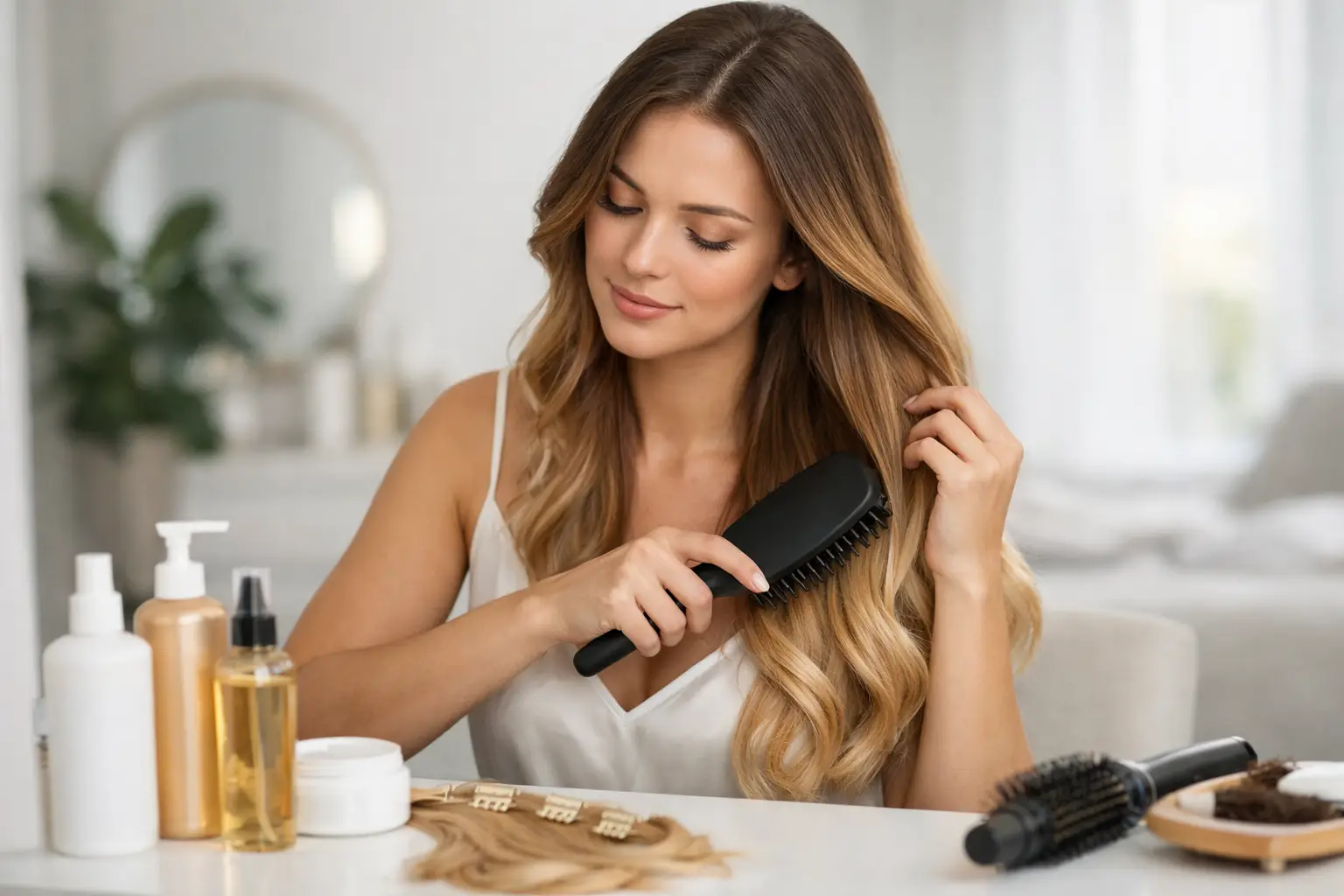
Fresh extensions should look glossy, soft and completely believable – not dry at the ends, tangled at the nape or obvious around the bonds. A consistent hair extensions maintenance routine is what keeps your investment looking expensive long after your fitting appointment. The right habits take minutes, but they make a real difference to shine, comfort and how long your extensions can stay looking beautiful.
Whether you wear tape-ins, nano rings, micro rings, keratin bonds or a weave, your natural hair and your extensions need a little more care than your usual wash-and-go routine. The details depend on your fitting method, hair type and how often you style, so always follow your extension specialist’s specific advice first.
Start with the right daily hair extensions maintenance routine
Brush your hair at least twice a day: once in the morning and once before bed. Hold the hair near the roots with one hand, then work gently from the ends upwards using an extension-friendly brush. This stops you pulling on the attachment points while you remove small knots before they become a bigger problem.
Pay extra attention to the area at the nape of your neck, behind your ears and where your natural hair meets the extensions. These are the places most likely to tangle from movement, scarves, coats and sleeping. Never yank through a knot. Separate it with your fingers first, then brush it out patiently from the bottom.
Keep styling products away from bonds, tapes and rings. Lightweight leave-in conditioning spray or a small amount of serum through the mid-lengths and ends can give a smooth, polished finish, but oils and heavy products close to the roots may cause attachments to slip or collect residue. Less is usually more.
Wash extensions without causing dryness or slipping
Extensions do not receive natural oils from your scalp in the same way as your own hair, particularly through the lower lengths. That is why over-washing can leave them feeling dull or rough. For many clients, washing two to three times a week is plenty, although gym sessions, scalp type and product build-up can change what works for you.
Before washing, brush thoroughly while the hair is dry. Wet hair is more fragile, and starting with tangles makes everything harder. In the shower, keep your head upright rather than flipping your hair forwards over the bath. Let the water run down the hair and use your fingertips to cleanse the scalp gently, without scrubbing attachments or piling hair on top of your head.
Choose salon-recommended, sulphate-free products where possible. Apply shampoo mainly to your scalp and allow the lather to travel through the lengths as you rinse. Follow with conditioner from the mid-lengths to the ends, avoiding bonds and tapes. A weekly nourishing mask can revive dry lengths, but it should also stay well clear of the attachment area.
Rinse longer than you think you need to. Leftover shampoo, conditioner or dry shampoo can create build-up at the roots, making extensions feel less fresh and sometimes affecting their hold.
Dry carefully after every wash
Do not go to bed with wet extensions. It is one of the quickest routes to matting, particularly at the nape. Gently squeeze out excess water with a soft towel rather than rubbing, then apply heat protection through the lengths.
Dry the roots and attachment points first using a low to medium heat setting. Once the roots are fully dry, work through the lengths with a brush and dryer until everything is dry. You can let the ends air-dry occasionally if they are in good condition, but bonds, rings and tapes should never be left damp.
Style for shine, not stress
Human-hair extensions can be curled, straightened and blow-dried, but they will look their best for longer when heat is used thoughtfully. Always apply heat protection and keep tools on the lowest effective temperature. Fine or lightened extensions need particular care, as repeated high heat can make them brittle much faster than natural virgin hair.
When using straighteners or curling tongs, stay away from the attachment points and avoid clamping directly over bonds or tapes. For a glamorous finish with less heat exposure, try a smooth blow-dry, heatless curls or loose overnight plaits. Small changes to your styling routine can protect the softness that makes extensions look so natural.
If your own hair is prone to frizz, do not try to fix it by applying heavy oils at the roots. A professional smoothing treatment or a tailored styling plan may be a better option, depending on your extension type. Ask your stylist before booking any chemical or keratin service, as timing and product choice matter.
Protect your extensions while you sleep and exercise
A loose, low plait or ponytail before bed keeps the hair contained and reduces friction against your pillow. A silk or satin pillowcase is also a lovely upgrade for reducing roughness and helping your style last. Do not tie hair tightly at the roots, especially with a fresh fitting, as tension can cause discomfort and put unnecessary strain on your natural hair.
For workouts, secure your hair in a loose plait or low ponytail. After a sweaty session, allow the roots to dry properly rather than keeping damp hair tied up under a cap or in a bun. You may not need a full wash every time, but scalp hygiene still matters, particularly if you use dry shampoo regularly.
Swimming needs a little planning. Chlorine, salt water and sunscreen can dry extensions and alter their tone, especially blonde shades. Tie hair up, avoid soaking it where possible and rinse it with clean water immediately afterwards. Follow with a gentle wash and conditioner if the hair has been fully submerged.
Know when to book maintenance
Extensions should feel secure and comfortable. If you notice slipping tapes, loose rings, exposed bonds, persistent tangling near the roots or any soreness, do not try to fix them at home. Pulling, cutting or gluing attachments yourself can damage your natural hair and make a professional refit more difficult.
Maintenance timing depends on the method and your natural growth rate. Tape and ring methods usually need regular move-up appointments as your natural hair grows, while bonded extensions are commonly removed and replaced within the timeframe recommended by your stylist. Leaving them in too long can lead to visible attachments, matting and tension at the root.
A maintenance appointment is also the ideal time to check your colour blend, trim tired ends and refresh the shape of your style. Extensions should move with your life, not become another beauty job you are constantly trying to hide.
Small habits that protect your natural hair
Beautiful extensions should never come at the expense of your own hair. Avoid wearing the same tight up-do every day, brush gently at the roots and give your scalp a proper cleanse rather than relying only on dry shampoo. If you experience ongoing pulling, headaches, itching or breakage, contact your extension specialist promptly.
Be honest at consultations about previous colouring, thinning, scalp sensitivity and how much time you realistically have for upkeep. The most suitable method is not always the one that looks best in a single photograph. It is the one that suits your hair density, lifestyle and willingness to maintain it correctly.
For clients who want polished hair alongside lashes, nails, facials or event-ready beauty, Glam Master offers the convenience of keeping your beauty appointments in one Manchester destination. A professional consultation can help you choose an extension plan that looks flawless and feels comfortable.
Treat your extensions like the luxury hair they are: brush with patience, wash with care and book maintenance before small issues become costly ones. Your best hair days are usually built on the routine you follow between salon visits.