

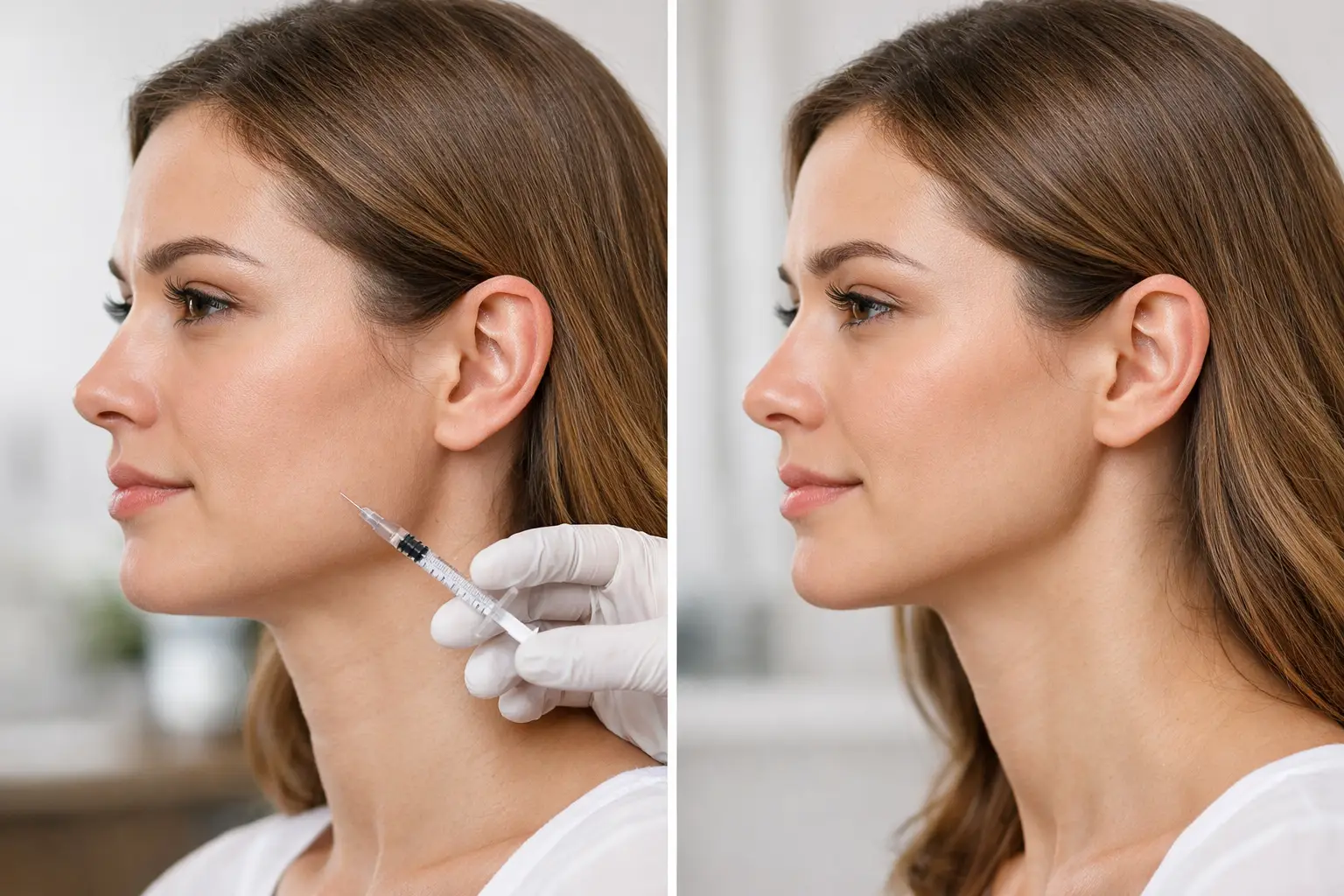
A strong, square jaw can look beautifully defined, but when the masseter muscles are overworked, it can also make the lower face appear wider or create uncomfortable clenching. Masseter Botox before after results can be striking, but they are not an overnight face change. The treatment works gradually, with results shaped by your muscle strength, facial structure, dose and treatment goals.
For clients who want a softer lower-face contour, less jaw tension or support with teeth grinding, this is a precision treatment that deserves a proper consultation. The best result is not a copy of someone else’s before-and-after photo. It is a balanced, natural-looking change that still looks like you.
What does masseter Botox actually do?
The masseter is the powerful chewing muscle at the back of each jaw. It can become enlarged through genetics, regular gum chewing, jaw clenching or bruxism, which is the habit of grinding teeth. Botulinum toxin injections temporarily reduce the muscle’s activity. Over time, a less active muscle may reduce in bulk, creating a more tapered appearance through the lower face.
For some clients, the aesthetic benefit is a subtly slimmer jawline. For others, the biggest difference is functional: less tension on waking, fewer clenching episodes and reduced facial soreness. These goals often overlap, but they are not the same thing. If tooth grinding is affecting your teeth, gums or sleep, it is sensible to speak to your dentist too. Botox may help muscle tension, but it does not replace dental care or a night guard where one is needed.
Masseter Botox before after: when will you see a change?
The first thing to know is that there are two timelines. Muscle movement begins to reduce before the face visibly changes. A good practitioner will set this expectation from the start, rather than promising a dramatic result by the weekend.
The first few days
You may notice mild tenderness, tiny injection marks or a small amount of swelling around the jaw. This usually settles quickly. Most people can return to normal daily plans straight away, although it is wise to give your face a little breathing room and follow your aftercare advice.
Around two weeks
This is often when reduced clenching or a lighter feeling in the jaw becomes more noticeable. A review may be recommended depending on your treatment plan. The visual change may still be subtle because the masseter muscle needs time to reduce in size.
Four to eight weeks
This is the stage where many masseter Botox before-after comparisons begin to show a clearer contour change. The lower face can look less broad from the front and more refined in photographs, particularly if enlarged masseters were a major contributor to the jaw shape.
Three to six months
Results vary, but the effects are temporary and maintenance appointments are usually needed to retain them. People with very strong masseter muscles may need a different plan from someone seeking a small, softening adjustment. Your practitioner should assess results conservatively and adjust only where appropriate.
Why before-and-after photos can look very different
A before-and-after image can be useful, but it cannot tell the whole story. Lighting, head position, facial expression, weight changes and even how tightly someone is clenching can alter the appearance of the jaw. The most reliable comparison uses photos taken at the same angle, in similar light and with the jaw relaxed.
Your natural bone structure matters too. Masseter Botox can reduce muscular width, but it does not change the jawbone, remove fat or tighten loose skin. If a wide lower face is mainly caused by bone structure, jowls or fullness under the chin, another treatment approach may be more suitable. This is why a consultation should focus on your face, not a one-size-fits-all trend.
Is masseter Botox right for your goals?
This treatment can suit clients who feel their jaw looks bulky due to strong chewing muscles, clench during stressful periods, grind their teeth, or want a gentler V-shaped lower-face contour. It can be especially appealing if you want a non-surgical option with minimal downtime and a natural progression rather than an instant, obvious transformation.
It is not ideal for everyone. If your main concern is skin laxity, a weak chin, pronounced jowls or facial volume loss, relaxing the masseters may not give the effect you have in mind. In some faces, over-treating this area can make the lower face look less supported. A responsible practitioner will sometimes advise against treatment, recommend a lower dose or suggest waiting until a clearer plan is in place.
Pregnancy and breastfeeding, certain neurological conditions, active skin infections and some medications may mean treatment should be postponed or avoided. Always share your complete medical history, allergies and dental concerns during your consultation.
What happens at a masseter Botox appointment?
Your appointment should begin with an assessment of your jaw at rest and while clenching. The practitioner will check the size and movement of each masseter muscle, discuss any history of jaw pain or grinding, and talk through the result you want. This is the time to be honest about whether you want facial slimming, clenching relief or both.
The injections themselves are quick. Small amounts of product are placed into carefully selected points in each masseter. Precision matters because the jaw contains several muscles, and placement needs to support natural expression and function. You should never feel rushed into treatment or pressured to have more units than your assessment calls for.
At Glam Master, a consultation can help you understand whether masseter Botox fits your face, lifestyle and goals before you commit. A tailored plan is far more valuable than choosing treatment based on a filtered social media photo.
Possible side effects and the trade-off to consider
Masseter Botox is commonly performed, but it is still a medical aesthetic treatment and should be carried out by an appropriately qualified practitioner. Common short-term effects include tenderness, bruising, slight swelling or a headache. These are usually temporary.
Less commonly, people can experience temporary chewing fatigue, an uneven smile or facial asymmetry if the product affects nearby muscles. This is one reason a cheap, high-dose offer is not a good reason to choose a provider. The aim is to relax the muscle enough to meet your goals while preserving comfortable chewing and balanced facial movement.
Ask who will perform your treatment, how your suitability is assessed, what product is being used and what support is available if you have a concern afterwards. Clear answers are part of a quality aesthetic experience.
Aftercare for the best possible result
Follow the specific advice given at your appointment, as it may differ depending on your treatment. In general, avoid rubbing or pressing firmly on the injection area straight afterwards. Keep exercise, alcohol, heat treatments and facial massage on hold for the period advised by your practitioner, and avoid booking a deep facial massage immediately after your injections.
Try not to judge your result too early. Take relaxed, consistent photos before treatment and again at four, eight and twelve weeks if you want to track your progress properly. If you clench at night, manage stress where possible and continue any dental advice you have been given. Your jawline treatment works best as part of a plan that looks after the cause of the tension as well as the visible effect.
The most flattering masseter Botox result is usually the one that makes friends say you look rested, rather than asking what you had done. Book a consultation when you are ready to discuss your jaw concerns openly, set realistic expectations and choose a result that feels polished, confident and completely your own.