
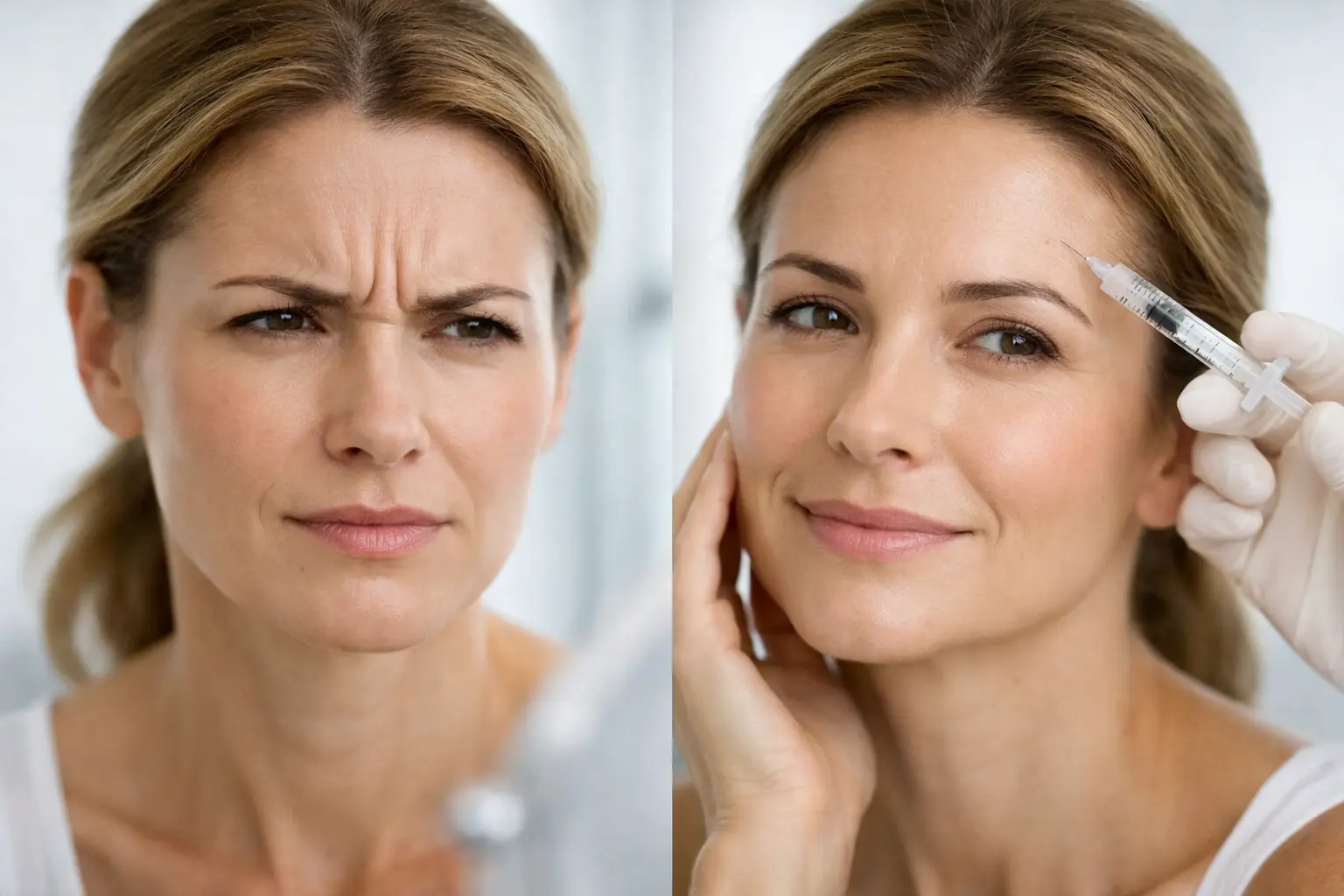
Those vertical lines between the eyebrows can make you look cross, worried or tired even when you feel perfectly relaxed. So, can Botox soften frown lines? For many people, yes. Anti-wrinkle injections can relax the small facial muscles that repeatedly pull the brows together, helping the area look smoother and more rested without changing who you are.
The best results are not about erasing every expression. They are about creating a fresher, softer look that still feels like you. A personalised consultation is the starting point, especially if your frown lines are deep, you have had treatment before, or you want a subtle first-time result.
Can Botox Soften Frown Lines at Any Age?
Botox is a brand name commonly used to describe botulinum toxin type A treatment. When prescribed and administered by an appropriately qualified medical professional, it temporarily reduces activity in selected muscles. In the frown area, these are usually the muscles responsible for drawing the eyebrows down and inwards.
Frown lines are often called the “11 lines” because they can appear as two vertical creases between the brows. Some people also develop a horizontal crease across the bridge of the nose or a more pronounced fold at the top of the nose. These lines form through years of facial movement, but genetics, sun exposure, smoking, stress and skin quality can all affect how early they show and how deeply they settle.
Treatment can be suitable for adults of different ages, but the likely outcome depends less on a number and more on the condition of your skin and lines. If your creases only show when you frown, they are known as dynamic lines and often respond very well. If they remain visible when your face is at rest, they are static lines. Botox may still soften them, but it may not remove them completely because the crease has become etched into the skin.
That distinction matters. A good practitioner will set realistic expectations rather than promise a completely blank forehead.
What Happens During Frown Line Treatment?
Your appointment should begin with a proper consultation. Your practitioner will ask about your medical history, current medicines, previous aesthetic treatments, allergies and what you would like to change. They should also assess how your brow and forehead move naturally. This is essential because every face has a different muscle pattern.
The injections themselves are quick. Small, carefully placed doses are delivered into the muscles around the glabella – the area between the eyebrows. Most clients describe the feeling as a brief pinprick. There is usually no need for downtime, so many people return to work, errands or plans afterwards.
For the rest of the day, follow the aftercare given by your practitioner. You may be advised to avoid rubbing the treated area, strenuous exercise, excessive heat, alcohol and lying flat for a short period. These instructions can vary, so your own aftercare advice should always take priority.
Tiny red marks, slight swelling or a small bruise can happen at injection points. These effects are normally temporary. If you are planning treatment ahead of a wedding, holiday or big night out, give yourself enough time rather than booking at the last minute.
When Will You See Results?
Anti-wrinkle treatment is not an instant fix. Most people begin to notice reduced movement within a few days, with the full effect usually developing over around two weeks. Your frown may feel less forceful first, then the area gradually appears smoother as the skin is no longer being repeatedly folded in the same way.
Results commonly last around three to four months, although this varies. Your metabolism, muscle strength, dose, treatment history and lifestyle all play a part. Some clients find that regular, appropriately spaced appointments help them maintain a softer look over time, while others prefer treatment only before major events or when movement starts returning.
It is tempting to think more product automatically means better results. It does not. An over-treated frown area can look heavy or unnatural, particularly if forehead movement and brow position have not been assessed properly. Precision is what creates a polished result.
What Botox Can and Cannot Do for Deep Lines
Botox works on the muscle action that causes frowning. It does not directly replace lost volume, resurface damaged skin or tighten loose skin. If you have deep lines at rest, your practitioner may discuss a combined plan that addresses both movement and skin quality.
Depending on your goals and suitability, this may mean giving Botox time to prevent the crease from worsening, alongside professional skin treatments and a consistent home routine. Daily SPF is one of the most worthwhile habits for protecting collagen and helping prevent lines from becoming more pronounced. Hydration, good sleep and avoiding smoking can support overall skin health too, although they cannot replace a clinical treatment.
Dermal filler is occasionally discussed for static lines, but the frown area is medically complex and carries significant risks if injected incorrectly. It is not a routine add-on and should only ever be considered following an in-depth assessment by a highly experienced, appropriately qualified practitioner. The safest treatment plan is not always the most dramatic one.
Choosing the Right Practitioner Matters
Botox is a prescription-only medicine in the UK. You should have a face-to-face medical assessment with a qualified prescriber before treatment is supplied, unless there is a lawful and clinically appropriate alternative arrangement led by the prescriber. Never buy injectable products online or accept treatment in an unregulated setting simply because the price is lower.
Ask who will prescribe the product, who will carry out the injections, what training and experience they have, and what happens if you need a review. You should feel able to ask questions without being rushed. A reputable practitioner will explain the benefits, limitations, possible side effects and aftercare clearly before you decide.
Botox is not right for everyone. Treatment may need to be postponed or avoided if you are pregnant or breastfeeding, have an infection at the injection site, have certain neurological conditions, or are taking particular medicines. This is why an honest medical consultation matters.
Possible side effects include headache, tenderness, bruising and temporary asymmetry. Less commonly, a drooping eyelid or brow can occur. Serious reactions are rare, but urgent medical advice is needed if you experience difficulty swallowing, speaking or breathing, severe weakness, or symptoms that concern you. Your practitioner should provide clear contact and follow-up information.
How to Keep Your Result Looking Natural
The most flattering frown-line results let people notice that you look well, not guess exactly what you have had done. Be clear about whether you want a completely smooth look or prefer some natural movement. Bring up any concerns about a heavy brow, asymmetry or previous disappointing treatment during your consultation.
Avoid booking repeated top-ups too soon. Your practitioner should assess the effect once it has had time to settle and recommend a safe treatment schedule based on your individual response. Chasing movement every few weeks is not the route to a better result.
At Glam Master in Manchester, a consultation can help you decide whether anti-wrinkle treatment fits your goals, your facial movement and your diary. It is a chance to discuss the look you want – from a light softening of the 11 lines to a more visibly smooth finish – before committing to treatment.
A softer frown can make a surprisingly big difference to how refreshed you feel when you catch your reflection. Give yourself the benefit of expert assessment, realistic expectations and enough time before an important occasion, then choose the treatment plan that feels right for your face.