

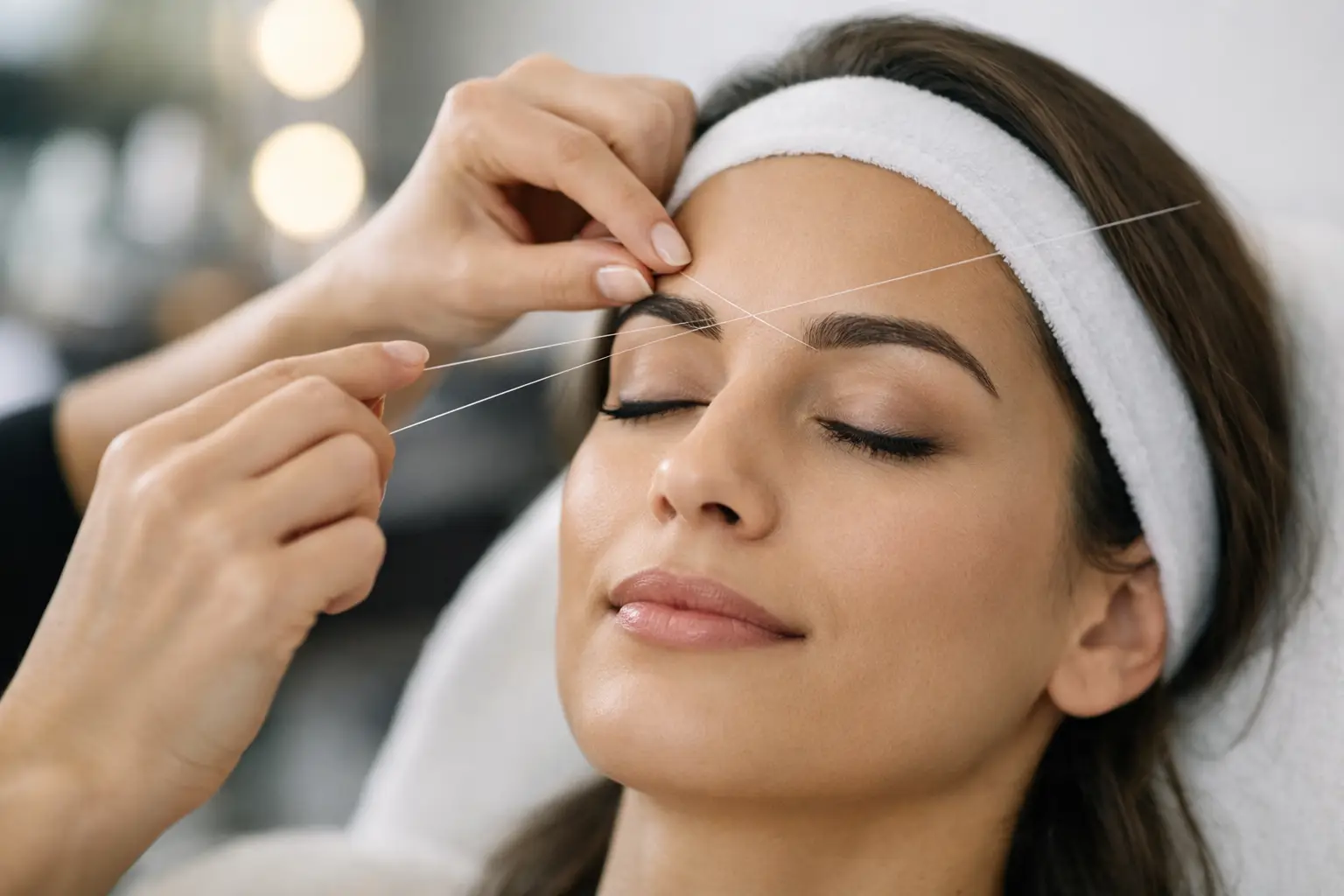
Freshly threaded brows have a way of changing your whole face. The arch looks cleaner, your eyes appear more lifted, and makeup sits better straight away. If you have been wondering how often should you get threading, the short answer is usually every 2 to 4 weeks – but your ideal timing depends on the area treated, how fast your hair grows, and how defined you like your finish.
Threading is one of the best options for clients who want precise hair removal without the fuss of daily maintenance. It is quick, neat and especially popular for brows, upper lip, chin and other facial areas where shape matters. The real question is not just how often to book, but how to keep your results looking consistently polished without overdoing it.
How often should you get threading for the best results?
For most people, threading every 2 to 4 weeks keeps the area tidy and well-shaped. Brows often sit at the 2 to 3 week mark if you like a very crisp, defined look. Upper lip threading may need topping up closer to every 2 weeks, while chin or side-of-face threading can vary more depending on your natural growth.
If your hair grows quickly, waiting too long can mean losing the clean shape completely. If your growth is slower, you might comfortably stretch appointments to 4 weeks. The sweet spot is booking before the regrowth becomes obvious, not after it has fully grown out.
This is why regular appointments tend to give the best finish. When threading is done on a routine schedule, the shape stays balanced and your therapist can maintain the line rather than having to rebuild it each time.
Why your threading schedule is not the same as everyone else’s
Hair growth is personal. Genetics play a big part, but hormones, age, medication and even stress can affect how quickly hair comes back. Some clients notice visible regrowth within days on the upper lip, while others can go nearly a month before their brows need attention.
Your beauty routine matters too. If you wear full makeup regularly, go to lots of events, or simply love a very polished brow, you are likely to want appointments more often. If you prefer a softer, more natural shape, you may be happy to leave a bit more regrowth between visits.
There is also skin sensitivity to consider. Threading is gentle for many people, but if your skin becomes red easily or you are using active skincare like retinol or exfoliating acids, spacing your appointments properly matters. In those cases, a good therapist will help you find a routine that keeps your skin calm as well as your brows sharp.
Brow threading timing: what most clients need
Brows are the area where timing makes the biggest visual difference. A strong brow shape frames the face, so even small regrowth can alter the look. Most clients book brow threading every 2 to 3 weeks to keep things clean and symmetrical.
If your brows are thick or fast-growing, 2 weeks may be your best rhythm. This keeps stray hairs under control and stops the arch from losing definition. If your growth is lighter, 3 to 4 weeks may be enough.
There is a trade-off here. Booking too frequently can mean removing hairs before enough regrowth appears, which may make the appointment less effective. Leaving it too long can lead to more reshaping and a less polished in-between period. That is why consistency tends to win.
When to book brow threading sooner
You may want an earlier appointment if you have a wedding, holiday, party or photoshoot coming up. Brows are one of those details that pull everything together. If you have a big event, booking 1 to 3 days before often works well, giving any redness time to settle while keeping the shape fresh.
If you are growing out over-threaded brows or correcting an uneven shape, the timing may be slightly different. In that case, your therapist may ask you to wait a little longer between sessions so there is enough hair to properly rebalance the brow.
How often should you get threading on the upper lip or face?
Facial threading outside the brows often needs a slightly different schedule. The upper lip usually grows back faster or at least appears noticeable sooner, so every 1 to 2 weeks is common. Chin threading may be every 2 to 3 weeks, while forehead, cheeks or side-of-face threading can often be maintained every 3 to 4 weeks.
The reason varies by area. Finer facial hair can appear quickly in certain lights, especially if you wear makeup or like a very smooth finish. Coarser hair on the chin may be less uniform, so maintenance depends on how visible it becomes and how comfortable you feel between appointments.
If you are threading multiple facial areas at once, your therapist may help you build a regular cycle that keeps everything in sync. That can save time and make maintenance easier than booking separate treatments at different stages of regrowth.
Signs you are due for another threading appointment
You do not always need to count the days exactly. Often, your face tells you when it is time. If the brow line has lost definition, the arch is not as crisp, or small hairs are starting to affect your makeup finish, you are probably ready to rebook.
For the upper lip and other facial areas, the clue is usually texture as much as visibility. Foundation may sit less smoothly, or you might notice hair more in daylight or close-up photos. If you are tweezing between appointments just to keep things looking tidy, that is often a sign your threading schedule needs tightening up.
How to make threading results last longer
You cannot stop hair growing, but you can make the most of each appointment. The first step is simple: avoid plucking between sessions. Tweezing random hairs might seem harmless, but it can throw off the shape and make it harder to create a clean, balanced result at your next visit.
Good aftercare helps too. Keep the area clean, avoid heavy touching, and be cautious with exfoliating acids, retinol, fake tan and strong active skincare for at least 24 hours after treatment. This is especially important on the face, where skin can be more reactive.
Regular appointments also improve the overall look. When you stick to a routine, you spend less time in that awkward in-between stage where the shape looks half grown out. For clients who love a polished beauty finish, that consistency makes all the difference.
Does threading make hair grow back thicker?
This is one of the most common concerns, and the answer is no. Threading does not make hair grow back thicker, darker or faster. It removes hair from the root, but it does not change the structure of the follicle in a way that causes thicker regrowth.
What can happen is that regrowth feels more noticeable after a very clean finish, especially on areas like the upper lip or brows. When skin is completely smooth, even a little hair can seem more obvious than before. That is perception, not thicker growth.
Is there such a thing as threading too often?
Yes, sometimes. If you book too soon and there is barely any regrowth, your therapist may not be able to remove much without affecting the shape. Overworking the skin can also increase sensitivity, especially if your barrier is already compromised by active skincare or recent treatments.
For most clients, letting enough hair grow in for effective removal gives the best outcome. That usually means at least 10 to 14 days for faster-growing facial areas, and around 2 to 3 weeks for brows. If your skin is delicate, spacing appointments sensibly matters just as much as the hair growth itself.
Finding your perfect threading routine
The best threading schedule is the one that suits your hair growth, your skin and how glam you like your finish to be. If you want crisp brows at all times, book more regularly. If you prefer lower-maintenance upkeep, you can leave a little more time between visits. Neither approach is wrong – it is about the result you want.
If you are not sure where to start, a professional threading appointment gives you a much clearer baseline. After one or two visits, it becomes easy to see whether you are a 2-week client, a 3-week client or someone who can stretch to 4. At Glam Master, that personalised approach is exactly what keeps your results looking clean, flattering and effortless.
A great threading routine should feel easy, not like guesswork. Once you find your timing, maintaining polished brows and smooth facial skin becomes one of the simplest ways to stay event-ready, work-ready and confident every day.